
Article
How to Choose Fire Pumps
The key factors that determine which fire pump configuration fits your project — driver type, flow, pressure, and layout.
Updated August 7, 2026
1 min read
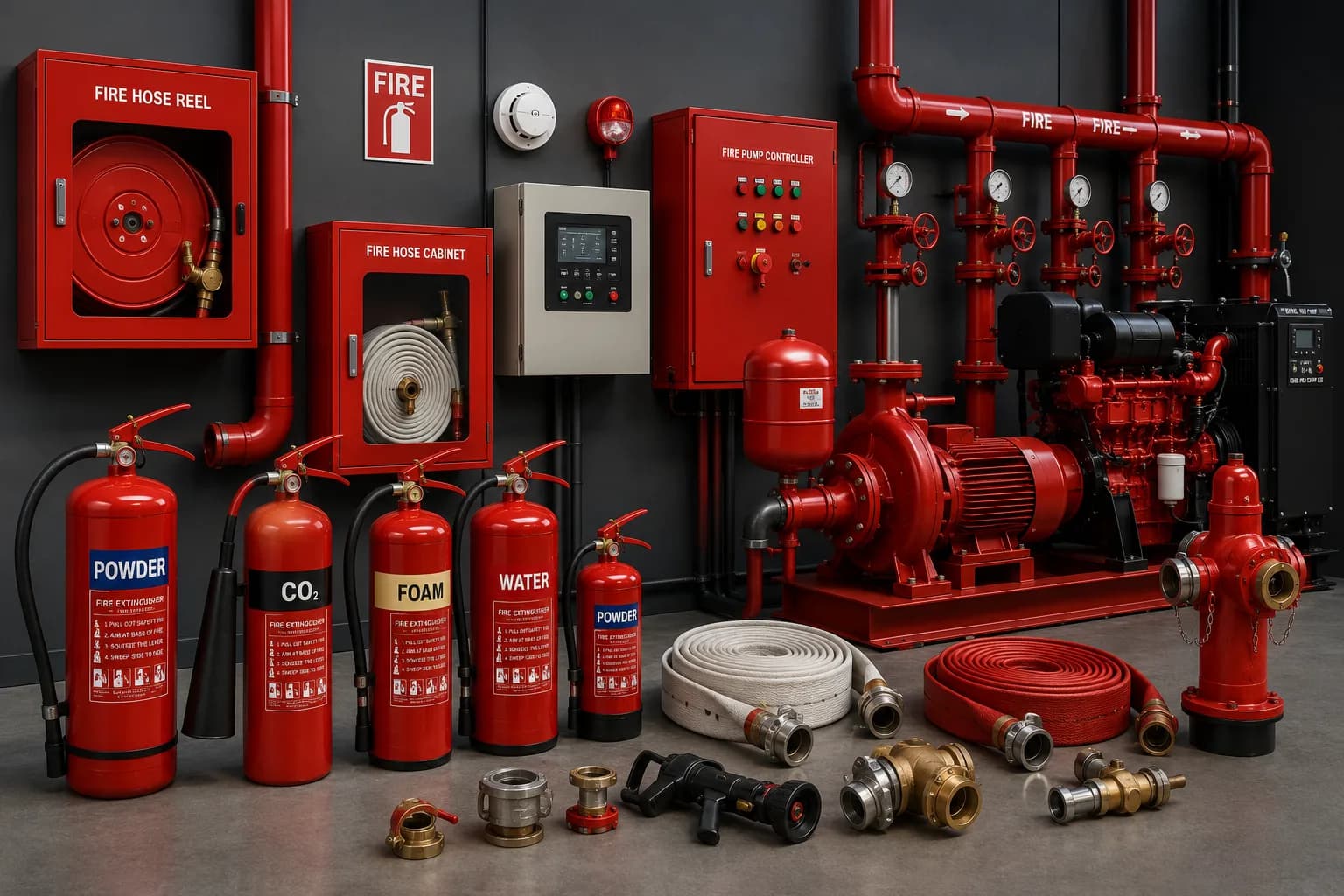
Determining Flow Rate and Pressure
Selecting a fire pump starts with your system's required flow rate and pressure, calculated from your building's hydraulic design and hazard classification.
Choosing a Driver Type: Electric or Diesel
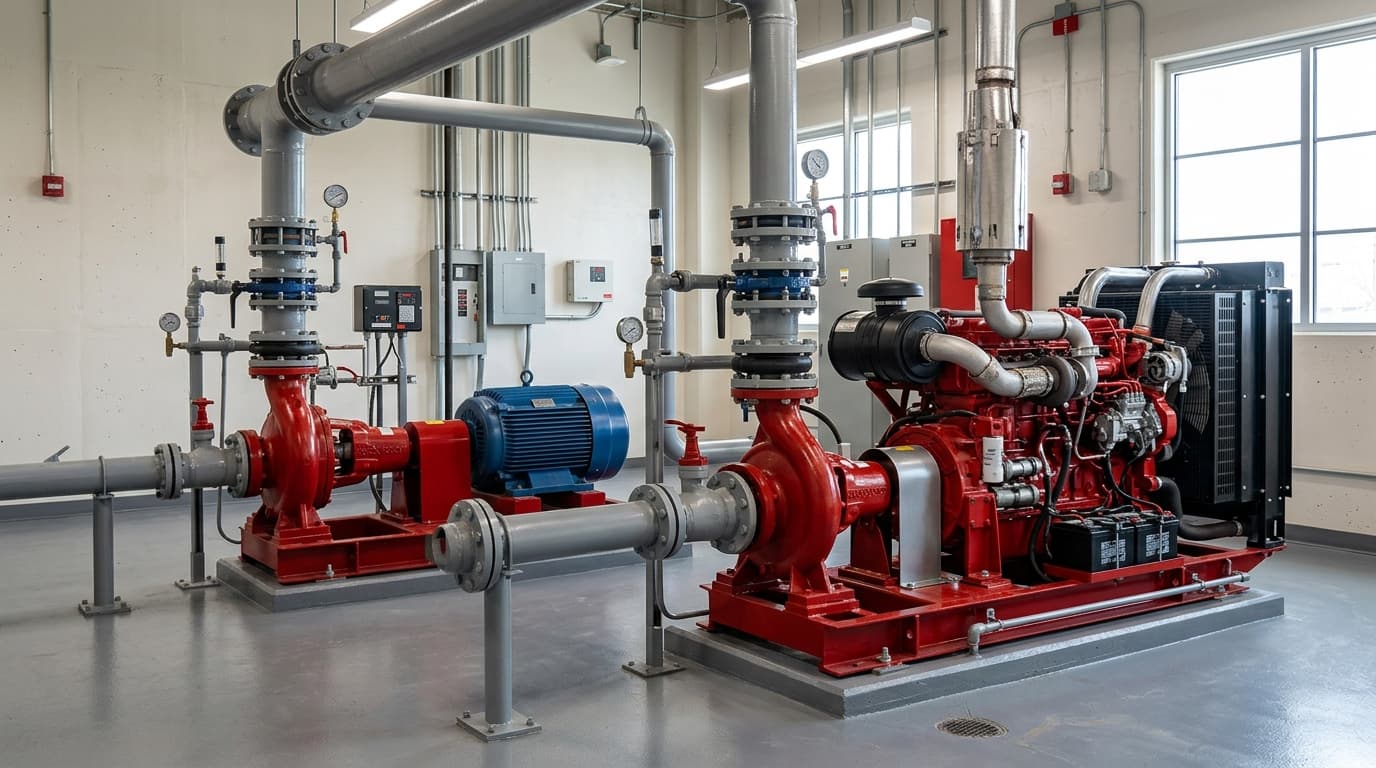
From there, the driver type — electric or diesel — is usually decided by site power reliability.
Important Note
Diesel-driven sets are common where continuous grid power can't be guaranteed during a fire event.
Pump Configuration Options
Configuration also matters.
Pump Configuration Comparison
| Criteria | Best Suited For |
|---|---|
Horizontal Split-Case | Most mid-to-large flow applications with adequate room |
End-Suction | Tighter plant rooms |
Vertical Turbine | Water source below the pump (a tank or well) |
Controller and Redundancy Requirements
Your specification should also confirm the controller type your driver requires and any local code requirements for redundancy, such as a backup pump or dual power feeds.
Getting a Tailored Quotation
Once your requirements are defined, share them with our procurement team, and we'll match you to genuine, quality-assured products from our supplier network:
Required flow and pressure
Driver preference (electric or diesel)
Any brand or code requirements
Need help selecting the right solution for your project?
Request a Quote
Related Articles

Have a project this relates to?
Share your requirements and our procurement team will get back to you with a tailored quotation.