
GOLTENS GENERAL SUPPLIES

Fire Protection Equipment

GOLTENS supplies fire protection equipment according to your project requirements, technical specifications and customer or consultant-approved documentation.

Fire pumps, valves, sprinklers, detection and alarm equipment, emergency lighting and portable fire protection equipment are supplied according to the requirements provided for quotation. Availability and configuration are confirmed during quotation.

Fire protection equipment procurement guide

GOLTENS supplies fire pumps, fire valves and hydrants, sprinklers and hose equipment, portable extinguishers, detection and alarm equipment and emergency lighting against the requirements you provide. Use this guide to start from your application, review what matters for each equipment type, and prepare the documents and information we need to quote.

These guides are general information to help you prepare your request — they are not a catalogue of specific models and do not replace your approved project documentation. Equipment is available on request and is quoted against the BOQ, specification and requirements you provide.

Choose Equipment by Application

Typical equipment for common fire protection procurement needs. Use this as a starting point — the equipment, quantities and requirements for your project come from your BOQ, specification and approved project documentation.

Fire Pumps & Water Supply

Pump sets, controllers, jockey pumps and drivers that supply water to the fire protection network. Pump equipment is quoted against the pump duty and requirements in your approved project documentation.

Fire Pump Sets

The main pumps that deliver water to sprinkler, hydrant and hose networks.

Available on request.

What it is

A fire pump with its driver, coupling and base, supplied as a set — commonly end-suction, split-case or vertical turbine.

What it is used for

Supplying water at the flow and pressure stated in the project documents to the fire protection network.

Typical applications
  • Building fire-water pump rooms

  • Sprinkler and hose networks

  • Site hydrant mains

  • Fire-water tanks and reservoirs

Typical projects and industries
  • Commercial & residential buildings
  • Factories & industrial facilities
  • Warehouses & logistics facilities
  • Hospitals & healthcare facilities
  • Infrastructure & large sites
Selection considerations and quotation checklist
Key selection considerations
  • Pump duty

    Flow and pressure as stated in your approved project documentation.

  • Pump type

    End-suction, split-case or vertical turbine, according to the specification and the water source.

  • Driver

    Electric motor or diesel engine, as specified.

  • Required documents

    The documentation your specification requires with the pump set.

Include in your quotation request
  • Pump duty from your project documents

  • Pump type and driver required

  • Water source and suction arrangement

  • Specification or BOQ item

  • Quantity, delivery location and required timing

Fire Pump Controllers

Control panels that start and monitor electric or diesel fire pumps.

Available on request.

What it is

A dedicated controller for a fire pump driver, with automatic start on pressure drop, manual start and status indication.

What it is used for

Starting the fire pump when the network calls for water and signalling pump status to the building fire alarm or monitoring system.

Typical applications
  • Electric fire pump sets

  • Diesel fire pump sets

  • Jockey pumps

  • Fire-water pump rooms

Typical projects and industries
  • Commercial & residential buildings
  • Factories & industrial facilities
  • Warehouses & logistics facilities
  • Hospitals & healthcare facilities
Selection considerations and quotation checklist
Key selection considerations
  • Driver type

    Controller for an electric motor or for a diesel engine.

  • Starting method

    The starting method stated in the specification for electric pumps.

  • Power supply

    Supply voltage and phase, and any transfer between normal and standby supply.

  • Signals

    Status and alarm signals required by the fire alarm or monitoring system.

Include in your quotation request
  • Pump and driver data

  • Supply voltage and phase

  • Starting method from the specification

  • Required remote signals

  • Quantity, delivery location and required timing
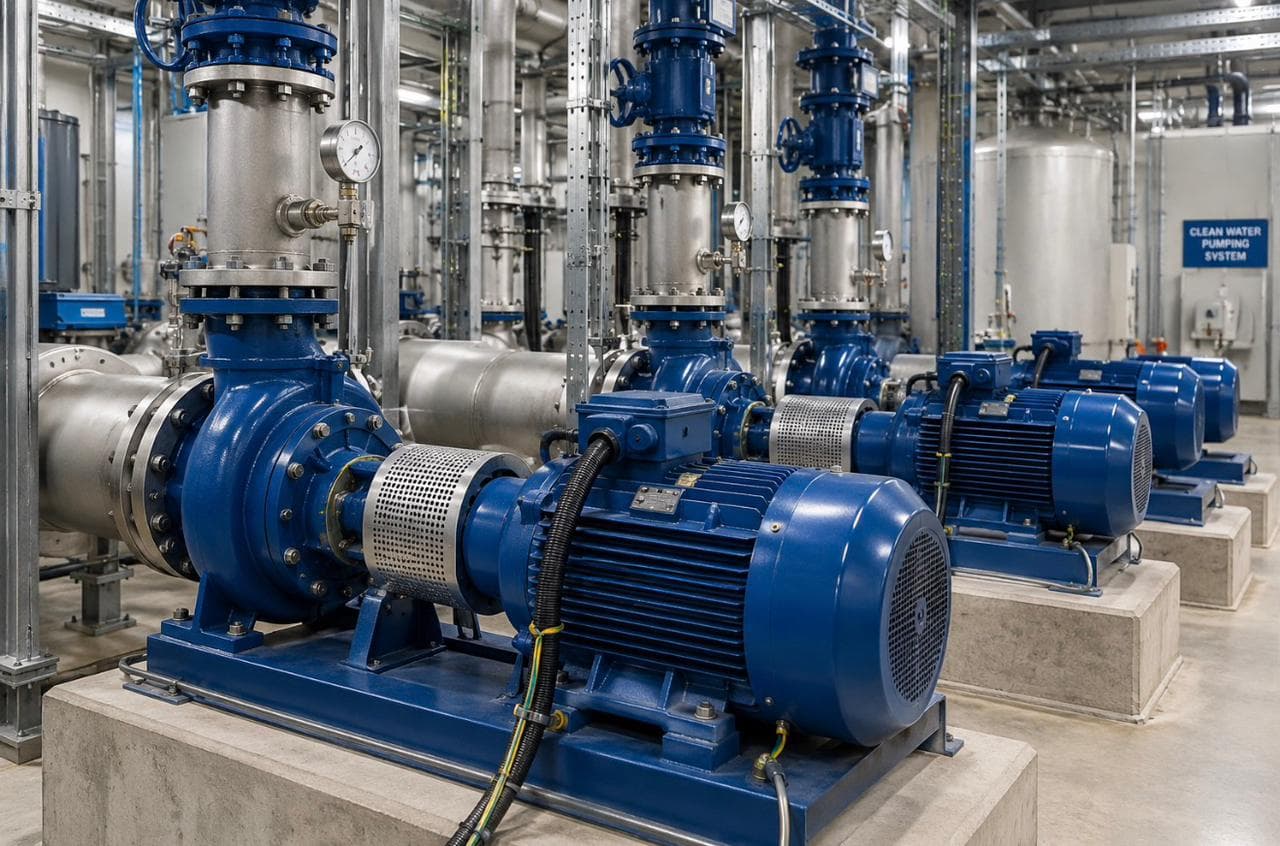
Jockey Pumps

Small pumps that keep the fire protection network pressurised.

Available on request.

What it is

A small pressure-holding pump, usually multistage, with its own controller.

What it is used for

Making up small pressure losses in the network so that the main fire pump does not start unnecessarily.

Typical applications
  • Sprinkler networks

  • Hose and riser networks

  • Hydrant mains

Typical projects and industries
  • Commercial & residential buildings
  • Factories & industrial facilities
  • Warehouses & logistics facilities
  • Hospitals & healthcare facilities
Selection considerations and quotation checklist
Key selection considerations
  • Duty

    Flow and pressure as stated in your project documents.

  • Pump arrangement

    Vertical or horizontal arrangement.

  • Controller

    Controller supplied with the pump or separately.

Include in your quotation request
  • Duty from your project documents

  • Supply voltage and phase

  • Controller required or not

  • Quantity, delivery location and required timing
Fire Pump Drivers — Diesel / Electric

Diesel engines and electric motors that drive fire pumps.

Available on request.

What it is

The driver of a fire pump set — a diesel engine with its fuel and cooling arrangement, or an electric motor.

What it is used for

Driving a new fire pump set, or matching the driver of an existing set as specified.

Typical applications
  • Diesel fire pump sets

  • Electric fire pump sets

  • Fire-water pump rooms

Typical projects and industries
  • Commercial & residential buildings
  • Factories & industrial facilities
  • Infrastructure & large sites
Selection considerations and quotation checklist
Key selection considerations
  • Driver type

    Diesel engine or electric motor, as specified.

  • Pump data

    The power and speed the pump requires, from the pump data.

  • Supply or fuel

    Supply voltage for motors; fuel tank and cooling arrangement for engines.

Include in your quotation request
  • Diesel or electric

  • Pump data or existing pump nameplate

  • Supply voltage or fuel and cooling arrangement

  • Quantity, delivery location and required timing

Fire Valves, Hydrants & Riser Equipment

Isolation, check and alarm valves for fire-water pipework, riser outlets and hydrants. Valves are quoted against the size, pressure class and connection stated in your specification.

Gate & OS&Y Valves

Isolation valves for fire-water mains, including outside stem & yoke valves that show their position.

Available on request.

What it is

A gate valve that isolates a section of pipework. On an OS&Y valve the rising stem shows at a glance whether it is open or closed.

What it is used for

Isolating pump suction and discharge, sprinkler control points and sections of hydrant mains.

Typical applications
  • Pump room pipework

  • Sprinkler control points

  • Hydrant mains

Typical projects and industries
  • Commercial & residential buildings
  • Factories & industrial facilities
  • Warehouses & logistics facilities
  • Infrastructure & large sites
Selection considerations and quotation checklist
Key selection considerations
  • Size and pressure class

    As stated in your specification or BOQ.

  • End connection

    Flanged or grooved, to match the pipework.

  • Position indication

    OS&Y rising stem, or a non-rising stem with an indicator where required.

  • Supervision

    Position switch, where the specification calls for one.

Include in your quotation request
  • Valve size

  • Pressure class

  • End connection

  • OS&Y or non-rising stem

  • Quantity, delivery location and required timing
Butterfly Valves

Compact isolation valves for fire-water pipework, commonly with a position indicator.

Available on request.

What it is

A quarter-turn valve with a disc in the bore, usually gear-operated with an indicator showing open or closed.

What it is used for

Isolating sprinkler zones, risers and pump room pipework where space is limited.

Typical applications
  • Sprinkler zone control

  • Risers

  • Pump room pipework

Typical projects and industries
  • Commercial & residential buildings
  • Factories & industrial facilities
  • Warehouses & logistics facilities
  • Hospitals & healthcare facilities
Selection considerations and quotation checklist
Key selection considerations
  • Size and pressure class

    As stated in your specification or BOQ.

  • Body type

    Wafer, lug or grooved body, to match the pipework.

  • Indication and supervision

    Indicator and position switch, where the specification calls for them.

Include in your quotation request
  • Valve size

  • Pressure class

  • Body type or end connection

  • Indicator and position switch required

  • Quantity, delivery location and required timing
Check Valves

Valves that let fire water flow in one direction only.

Available on request.

What it is

A non-return valve, commonly swing or wafer type, that closes against reverse flow.

What it is used for

Preventing backflow at pump discharges, fire service inlets and connections between supplies.

Typical applications
  • Pump discharge

  • Inlet connections

  • Hydrant mains

Typical projects and industries
  • Commercial & residential buildings
  • Factories & industrial facilities
  • Infrastructure & large sites
Selection considerations and quotation checklist
Key selection considerations
  • Size and pressure class

    As stated in your specification or BOQ.

  • Type

    Swing or wafer type, as specified.

  • End connection

    Flanged or grooved, to match the pipework.

Include in your quotation request
  • Valve size

  • Pressure class

  • Type and end connection

  • Quantity, delivery location and required timing
Alarm Check Valves

Wet or dry alarm valves that raise an alarm when water flows into a sprinkler system.

Available on request.

What it is

A check valve with alarm trim at the head of a sprinkler system, supplied as a wet or dry valve set.

What it is used for

Controlling a sprinkler system and signalling water flow to the alarm system and alarm gong.

Typical applications
  • Wet sprinkler systems

  • Dry sprinkler systems in unheated areas

  • Sprinkler valve rooms

Typical projects and industries
  • Commercial & residential buildings
  • Warehouses & logistics facilities
  • Factories & industrial facilities
  • Hotels & hospitality
Selection considerations and quotation checklist
Key selection considerations
  • Wet or dry

    As stated for the sprinkler system.

  • Size and connection

    As stated in your specification or BOQ.

  • Trim and accessories

    Alarm gong, pressure switch and gauges included with the set, as specified.

Include in your quotation request
  • Wet or dry valve

  • Valve size

  • End connection

  • Trim and accessories required

  • Quantity, delivery location and required timing

Landing Valves

Outlet valves on wet and dry risers for connecting fire hoses at each floor.

Available on request.

What it is

A hose outlet valve on a riser, with an outlet coupling for fire hoses — commonly in a cabinet or on the landing.

What it is used for

Giving hose connection points on each floor of a building.

Typical applications
  • Wet risers

  • Dry risers

  • Hose stations and cabinets

Typical projects and industries
  • Commercial & residential buildings
  • Hospitals & healthcare facilities
  • Hotels & hospitality
  • Schools, universities & public buildings
Selection considerations and quotation checklist
Key selection considerations
  • Riser type

    Wet or dry riser.

  • Pattern and inlet

    Oblique or right-angle pattern, and inlet connection.

  • Outlet coupling

    Coupling type to match the hoses in use.

Include in your quotation request
  • Wet or dry riser

  • Valve size and pattern

  • Inlet connection and outlet coupling

  • Quantity, delivery location and required timing

Fire Hydrants

External hydrants on site fire-water mains for fire brigade and site use.

Available on request.

What it is

An above-ground pillar hydrant or an underground hydrant, connected to the fire-water main, with hose outlets.

What it is used for

Providing water for fire fighting around buildings, yards and large sites.

Typical applications
  • Site hydrant networks

  • Industrial yards

  • Large building complexes

Typical projects and industries
  • Factories & industrial facilities
  • Warehouses & logistics facilities
  • Infrastructure & large sites
  • Schools, universities & public buildings
Selection considerations and quotation checklist
Key selection considerations
  • Hydrant type

    Pillar or underground hydrant, as specified.

  • Outlets

    Number and type of outlets and their couplings.

  • Main connection

    Inlet size and connection to the main.

Include in your quotation request
  • Pillar or underground

  • Outlet arrangement and couplings

  • Inlet size and connection

  • Quantity, delivery location and required timing

Sprinklers, Hose & Portable Equipment

Sprinklers, hose reels, fire hoses, fire cabinets and portable extinguishers. Each item is quoted against the type and requirements stated in your BOQ or specification.

Sprinklers

Automatic sprinklers that open individually when heat reaches them.

Available on request.

What it is

A heat-activated sprinkler with a frame, deflector and glass bulb or fusible element, in pendent, upright, sidewall or concealed form.

What it is used for

Discharging water over the area below when the temperature at the sprinkler rises.

Typical applications
  • Offices, hotels and hospitals

  • Retail and car parks

  • Warehouses and storage

  • Finished ceilings

Typical projects and industries
  • Commercial & residential buildings
  • Hotels & hospitality
  • Hospitals & healthcare facilities
  • Warehouses & logistics facilities
Selection considerations and quotation checklist
Key selection considerations
  • Type

    Pendent, upright, sidewall or concealed.

  • Response

    Standard or quick response, as stated in your approved project documentation.

  • K-factor and temperature rating

    From your approved project documentation — never chosen by the supplier.

  • Finish

    Finish and escutcheon or cover plate, as specified.

Include in your quotation request
  • Sprinkler type and response

  • K-factor and temperature rating from your project documents

  • Thread size and finish

  • Spare sprinkler cabinet and wrenches, if required

  • Quantity, delivery location and required timing

Hose Reels

Wall-mounted reels with semi-rigid hose for first-response fire fighting.

Available on request.

What it is

A fixed or swinging reel with semi-rigid hose, an inlet valve and a nozzle, connected to the water supply.

What it is used for

Letting building occupants and staff tackle a fire at an early stage.

Typical applications
  • Corridors and stair landings

  • Hose stations and cabinets

  • Workshops and warehouses

Typical projects and industries
  • Commercial & residential buildings
  • Factories & industrial facilities
  • Warehouses & logistics facilities
  • Schools, universities & public buildings
Selection considerations and quotation checklist
Key selection considerations
  • Reel type

    Fixed or swinging, and manual or automatic inlet valve.

  • Hose

    Hose diameter and length, as specified.

  • Mounting

    Wall-mounted or inside a cabinet.

Include in your quotation request
  • Fixed or swinging reel

  • Hose diameter and length

  • Wall-mounted or in a cabinet

  • Quantity, delivery location and required timing

Fire Hoses

Layflat delivery hoses with couplings for riser outlets and hydrants.

Available on request.

What it is

A flexible layflat hose, supplied in set lengths with couplings fitted, stored rolled or on a rack.

What it is used for

Carrying water from a landing valve or hydrant to the fire.

Typical applications
  • Riser outlets and hose cabinets

  • Hydrant points

  • Site fire-fighting equipment

Typical projects and industries
  • Commercial & residential buildings
  • Factories & industrial facilities
  • Warehouses & logistics facilities
  • Infrastructure & large sites
Selection considerations and quotation checklist
Key selection considerations
  • Diameter and length

    As stated in your specification or BOQ.

  • Couplings

    Coupling type to match the outlets in use.

  • Hose construction

    Lining and jacket type, as specified.

Include in your quotation request
  • Hose diameter and length

  • Coupling type

  • Accessories such as nozzles, if required

  • Quantity, delivery location and required timing

Fire Cabinets

Cabinets that house hose reels, landing valves, hoses and extinguishers.

Available on request.

What it is

A surface or recessed steel cabinet with a glazed or solid door, arranged for the equipment it holds.

What it is used for

Keeping fire-fighting equipment protected, visible and ready to use.

Typical applications
  • Corridors and lobbies

  • Stair landings

  • Car parks and plant areas

Typical projects and industries
  • Commercial & residential buildings
  • Hospitals & healthcare facilities
  • Hotels & hospitality
  • Schools, universities & public buildings
Selection considerations and quotation checklist
Key selection considerations
  • Contents

    Hose reel, landing valve, hose, extinguisher or a combination.

  • Mounting

    Surface or recessed.

  • Door and finish

    Glazed or solid door, and finish, as specified.

Include in your quotation request
  • Required contents

  • Surface or recessed

  • Door type and finish

  • Available space, if limited

  • Quantity, delivery location and required timing

Portable Fire Extinguishers

Hand-held extinguishers for first response, by extinguishing agent and fire class.

Available on request.

What it is

A portable extinguisher containing dry powder, carbon dioxide, water or foam, with a wall bracket or stand.

What it is used for

Tackling small fires at the point of need — the agent must suit the fire risk at each location.

Typical applications
  • Offices and public areas

  • Electrical and plant rooms

  • Kitchens

  • Workshops and warehouses

Typical projects and industries
  • Commercial & residential buildings
  • Factories & industrial facilities
  • Warehouses & logistics facilities
  • Hospitals & healthcare facilities
  • Schools, universities & public buildings
  • Hotels & hospitality
Selection considerations and quotation checklist
Key selection considerations
  • Extinguishing agent

    The agent your specification or risk assessment states for each location.

  • Capacity

    Capacity per extinguisher, as specified.

  • Mounting

    Wall bracket, stand or cabinet.

Include in your quotation request
  • Extinguisher type and agent

  • Capacity

  • Mounting: bracket, stand or cabinet

  • Quantity, delivery location and required timing

Detection, Alarm & Emergency Lighting

Fire alarm control panels, smoke, heat and beam detectors, emergency lighting and exit signs. Detection equipment is quoted against your specification and the compatibility requirements of the system it connects to.

Fire Alarm Control Panels

Addressable or conventional panels that monitor detectors and raise the alarm.

Available on request.

What it is

The control panel of a fire alarm system. Addressable panels identify each device; conventional panels report by zone.

What it is used for

Receiving signals from detectors and call points, sounding alarms and passing signals to other building systems.

Typical applications
  • Offices and commercial buildings

  • Hospitals and hotels

  • Factories and warehouses

  • Multi-building sites

Typical projects and industries
  • Commercial & residential buildings
  • Hospitals & healthcare facilities
  • Hotels & hospitality
  • Factories & industrial facilities
  • Schools, universities & public buildings
Selection considerations and quotation checklist
Key selection considerations
  • Panel type

    Addressable or conventional, as specified.

  • Capacity

    Number of loops or zones stated in your project documents.

  • Compatibility

    Compatibility with existing devices or a network of panels, where relevant.

  • Interfaces

    Outputs to other building systems, as specified.

Include in your quotation request
  • Addressable or conventional

  • Loops or zones from your project documents

  • Existing system details, if extending one

  • Repeater or network panels, if required

  • Quantity, delivery location and required timing

Smoke Detectors

Point detectors that sense smoke at an early stage.

Available on request.

What it is

A ceiling-mounted optical smoke detector on a base, connected to the fire alarm panel.

What it is used for

Early warning of fire in occupied rooms, corridors and escape routes.

Typical applications
  • Offices and bedrooms

  • Corridors and escape routes

  • Electrical and server rooms

Typical projects and industries
  • Commercial & residential buildings
  • Hospitals & healthcare facilities
  • Hotels & hospitality
  • Schools, universities & public buildings
Selection considerations and quotation checklist
Key selection considerations
  • System compatibility

    Must be compatible with the fire alarm panel and its protocol.

  • Addressable or conventional

    To match the panel type.

  • Base

    Standard base or a base with a sounder or isolator.

Include in your quotation request
  • Panel or system the detectors connect to

  • Addressable or conventional

  • Base type

  • Quantity, delivery location and required timing

Heat Detectors

Detectors for areas where smoke detection would cause false alarms.

Available on request.

What it is

A point detector that responds to a fixed temperature or a rapid rate of rise.

What it is used for

Detecting fire in kitchens, car parks, plant rooms and dusty or steamy areas.

Typical applications
  • Kitchens

  • Car parks

  • Plant and boiler rooms

Typical projects and industries
  • Commercial & residential buildings
  • Hotels & hospitality
  • Factories & industrial facilities
  • Hospitals & healthcare facilities
Selection considerations and quotation checklist
Key selection considerations
  • Detection type

    Fixed temperature or rate of rise, as specified.

  • System compatibility

    Must be compatible with the fire alarm panel and its protocol.

  • Base

    Base type to match the system.

Include in your quotation request
  • Panel or system the detectors connect to

  • Fixed temperature or rate of rise

  • Base type

  • Quantity, delivery location and required timing

Beam Smoke Detectors

Beam detectors that cover large open and high-ceiling spaces.

Available on request.

What it is

A projected-beam smoke detector — a transmitter and receiver, or a single unit with a reflector — across the protected space.

What it is used for

Detecting smoke where point detectors are hard to reach or space too widely apart.

Typical applications
  • Warehouses

  • Halls and atriums

  • Factories and hangars

Typical projects and industries
  • Warehouses & logistics facilities
  • Factories & industrial facilities
  • Schools, universities & public buildings
  • Commercial & residential buildings
Selection considerations and quotation checklist
Key selection considerations
  • Beam type

    Transmitter and receiver, or reflector type.

  • Coverage

    Beam length and mounting height from your project documents.

  • System compatibility

    Interface with the fire alarm panel, as specified.

Include in your quotation request
  • Panel or system the detectors connect to

  • Beam length and mounting height

  • Transmitter-receiver or reflector type

  • Quantity, delivery location and required timing

Emergency Lighting

Luminaires that light escape routes and key areas when normal power fails.

Available on request.

What it is

An emergency luminaire with its own battery or fed from a central battery system, in maintained or non-maintained operation.

What it is used for

Lighting escape routes, stairs and exits so people can leave a building safely during a power failure.

Typical applications
  • Corridors and stairs

  • Exits and assembly areas

  • Plant rooms and car parks

Typical projects and industries
  • Commercial & residential buildings
  • Hospitals & healthcare facilities
  • Hotels & hospitality
  • Schools, universities & public buildings
  • Factories & industrial facilities
Selection considerations and quotation checklist
Key selection considerations
  • Supply type

    Self-contained battery or central battery system.

  • Operation

    Maintained or non-maintained, as specified.

  • Duration and mounting

    Emergency duration and mounting as stated in your specification.

Include in your quotation request
  • Self-contained or central battery

  • Maintained or non-maintained

  • Emergency duration from the specification

  • Mounting: ceiling, wall or recessed

  • Quantity, delivery location and required timing

Exit Signs

Illuminated signs that mark exits and escape route directions.

Available on request.

What it is

An illuminated exit sign with a pictogram and direction arrow, battery-backed or fed from a central system.

What it is used for

Guiding people to the nearest exit, including during a power failure.

Typical applications
  • Exit doors

  • Corridors and changes of direction

  • Stairs and assembly areas

Typical projects and industries
  • Commercial & residential buildings
  • Hospitals & healthcare facilities
  • Hotels & hospitality
  • Schools, universities & public buildings
Selection considerations and quotation checklist
Key selection considerations
  • Sign type

    Pictogram, wording and direction arrows, as specified.

  • Supply type

    Self-contained battery or central battery system.

  • Mounting

    Wall, ceiling-suspended or over-door.

Include in your quotation request
  • Pictogram, wording and arrows

  • Self-contained or central battery

  • Mounting: wall, suspended or over-door

  • Quantity, delivery location and required timing

Replacing Existing Equipment?

If you are replacing valves, hydrants, hose reels, fire hoses, fire cabinets, portable extinguishers, emergency lighting or exit signs already in service, start from the existing equipment. Fire pumps, controllers, drivers, fire alarm panels and detectors are quoted against your specification and the compatibility requirements of the existing system.

How a replacement request works

  1. Existing equipment
  2. Nameplate or markings
  3. Photos
  4. Existing technical information
  5. Quantity
  6. Technical review
  7. Matching or technically suitable alternative
  8. Quotation

All equipment

  • Equipment type

  • Nameplate photo, markings or model

  • Photos of the equipment and how it is fitted

  • Quantity

  • Site or project

  • Existing technical information, if available

  • Required timing

Valves & hydrants

  • Valve or hydrant type

  • Size and pressure class

  • End connection

  • Body markings

  • Hydrant outlet arrangement

Hose reels, hoses & cabinets

  • Hose diameter and length

  • Coupling type

  • Reel type

  • Cabinet mounting, door and contents

Portable fire extinguishers

  • Extinguisher label photo

  • Type and agent

  • Capacity

  • Mounting

Emergency lighting & exit signs

  • Photos and labels of the existing fittings

  • Self-contained or central battery

  • Maintained or non-maintained

  • Mounting

GOLTENS reviews the available equipment information and can source a matching or technically suitable alternative for quotation. Final equivalence and suitability should be confirmed by the customer's consultant, engineering team or responsible authority, as applicable.

What to Include in Your Quotation Request

Fire protection requests are driven by the customer or consultant documents. Send the documents and information you have — these are your inputs, and missing details can be clarified during quotation.

Minimum information

  • Organization / customer name

  • Project or site location

  • BOQ / equipment list

  • Required quantities

  • Customer or consultant specification

  • Required listing / approval criteria, if applicable

  • Delivery location

  • Required timing

  • Project / tender reference

  • Contact details

Useful technical information

  • Pump duty information from the approved project documentation

  • Pump driver / controller requirement

  • Valve size

  • Pressure class

  • End connection

  • Sprinkler type / response requirement

  • Hose diameter / length / coupling requirement

  • Extinguisher type / agent requirement

  • Fire alarm panel type

  • Detector type and compatibility requirements

  • Existing equipment nameplate / model

  • Existing equipment photos

  • Required documentation

  • Quantity and installation location

You can include several fire protection items in one quotation request. If you are not sure about a detail, leave it out — our team will ask for what is needed to prepare the quotation.

How GOLTENS handles the request

  1. Requirement

    Send your requirement through the quotation form on this page, with the BOQ, equipment list or specification and any nameplate photos.

  2. Review of customer / consultant documentation

    Our team reviews the documents you send and asks for anything needed to define the equipment.

  3. Sourcing to the stated requirement

    We source equipment that matches the stated requirement — or, where you accept one, a technically suitable alternative — for quotation.

  4. Quotation

    You receive a quotation stating the proposed equipment, availability and lead time. Final technical acceptance remains with the customer, consultant or responsible authority, as applicable.

Request a Quote

Tell us what you need — equipment type, quantity and the BOQ or specification you have. Equipment is available on request.

Attachment (Optional)

Drag a file here, or click to browse

PDF, Excel, Word, or ZIP — up to 25MB per file.

The GOLTENS team will review your request and get in touch with you if needed.

Frequently Asked Questions

What information should I send for a fire protection quotation?

The BOQ or equipment list, the required quantities, the customer or consultant specification, any listing or approval requirements, the delivery location and the required timing. Each equipment guide on this page lists the details that matter for that equipment.

Can GOLTENS quote from a BOQ?

Yes. Send the BOQ or equipment list together with the specification it refers to. Items are quoted against the stated requirements, and anything unclear is raised with you during quotation.

Does GOLTENS design or calculate fire protection systems?

No. GOLTENS supplies fire protection equipment against the requirements provided for quotation. System design, calculations, installation, testing, commissioning and final acceptance remain with the customer, consultant, contractor or responsible authority, as applicable.

How are listing or approval requirements handled?

State the listing or approval requirements that your project specification calls for in your request. Equipment is quoted against those stated requirements, and the quotation states the documentation available for the offered equipment. Confirming that the equipment meets the project requirements remains with the customer, consultant or responsible authority, as applicable.

Can GOLTENS source replacement fire protection equipment?

For valves, hydrants, hose reels, fire hoses, fire cabinets, portable extinguishers, emergency lighting and exit signs, send the nameplate or markings, photos, the available technical information and the quantity. GOLTENS reviews the available equipment information and can source a matching or technically suitable alternative for quotation. Final equivalence and suitability should be confirmed by the customer's consultant, engineering team or responsible authority, as applicable. Pumps, controllers, drivers, fire alarm panels and detectors are quoted against the specification and compatibility requirements you provide.

Can I request several fire protection items in one quotation?

Yes. You can include several fire protection items in one quotation request — for example, every item in a BOQ or the equipment for one part of a project.

What if the specification is incomplete?

Send what you have. The minimum is the equipment type, the quantity and the requirement it must meet; missing details can be clarified with you or your consultant during quotation.

How is lead time confirmed?

Lead time depends on the equipment, its configuration and the stated requirements, so it is confirmed in each quotation rather than given as a single blanket figure.