
GOLTENS GENERAL SUPPLIES

Heavy Equipment & Machinery

GOLTENS supplies earthmoving equipment, cranes, and construction machinery — matched to your jobsite and technical requirements.

Heavy machinery and equipment for construction, industrial, and logistics operations.

Choose equipment by project

GOLTENS supplies heavy equipment and machinery according to project requirements and specifications. New and used equipment can be sourced according to customer requirements. Start from your project type, review what each machine does, and send us the details listed in each guide to receive a quotation.

The equipment guides on this page are general information to help you define your requirement. They are not a list of stocked models — the exact configuration, condition and availability are confirmed in each quotation.

Equipment by project type

Typical equipment combinations for common project types. Every project is different — use these as a starting point and confirm the final selection against your specification.

Earthmoving Equipment

Earthmoving equipment excavates, loads, pushes and grades soil and rock. These machines prepare a site and shape it to the levels a project requires — from bulk excavation to the final grade before paving or construction.

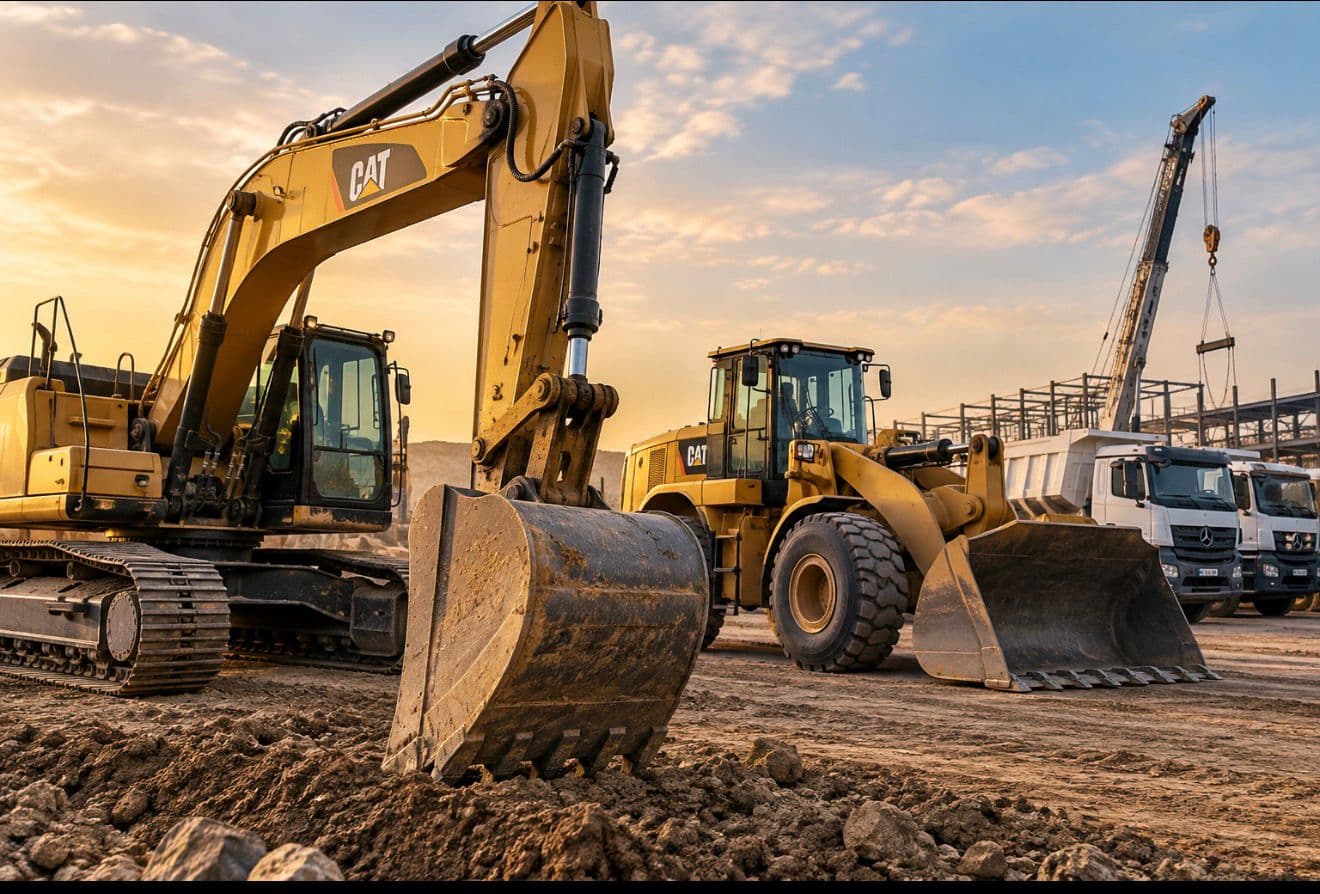
Hydraulic Excavators

A tracked or wheeled digging machine for excavation, trenching and truck loading — and, with the right attachment, breaking and demolition.

What it is

A hydraulic excavator carries a boom, arm and bucket on an upper structure that slews a full circle on a tracked or wheeled undercarriage. Because the bucket can be exchanged for other hydraulic attachments, one machine can dig, load, lift, grade and break.

What it is used for

Digging and moving earth and rock with control — excavating to a required depth, loading trucks and handling material within the machine's reach.

Typical applications
  • Foundation and basement excavation

  • Utility and pipeline trenching

  • Loading trucks in quarries and borrow pits

  • Site clearing and bulk earthworks

  • Demolition and breaking with suitable attachments

Typical projects and industries
  • Building construction
  • Roads & infrastructure
  • Utility networks
  • Quarries & aggregates
  • Demolition & rehabilitation
Selection considerations and quotation checklist
Key selection considerations
  • Operating weight class

    The machine's size class should suit the depth of digging, the bucket size and the limits on transporting it to site.

  • Tracks or wheels

    Tracks suit soft or uneven ground; wheels suit paved urban sites and frequent moves between work areas.

  • Reach and digging depth

    Check the machine's working range against the deepest and farthest point of the work.

  • Tail swing

    Short or zero tail-swing configurations suit confined sites and work next to roads or structures.

  • Attachments and auxiliary hydraulics

    Breakers, grapples and other tools require a compatible auxiliary hydraulic circuit.

Include in your quotation request
  • Main tasks and the material to be excavated

  • Required digging depth and reach

  • Ground conditions and site access

  • Attachments required

  • Quantity, new or used preference, delivery location and required timing

Wheel Loaders

An articulated wheeled machine with a front bucket for loading, stockpiling and moving loose material over short distances.

What it is

A wheel loader is a rubber-tyred machine that steers by articulating in the middle and carries a large bucket on a front lift arm. It scoops loose material, lifts it and carries it a short distance to a truck, hopper or stockpile.

What it is used for

High-volume loading and short-distance handling of loose materials such as sand, aggregate, soil and site debris.

Typical applications
  • Loading trucks and hoppers

  • Building and managing stockpiles

  • Moving material around yards and plants

  • Backfilling and site clean-up

  • Handling materials with forks or other quick-change attachments

Typical projects and industries
  • Quarries & aggregates
  • Building construction
  • Ports & logistics yards
  • Ready-mix & precast production
  • Municipal & public works
Selection considerations and quotation checklist
Key selection considerations
  • Bucket size and material

    Match the bucket volume to the material's density and to the size of the trucks or hoppers being loaded.

  • Dump height

    The loader must clear the side of the truck body or hopper it will load.

  • Tyres and ground

    Tyre type should suit the working surface, from soft sand to abrasive rock.

  • Load-and-carry distance

    Longer carry distances generally call for a larger machine; very long distances are usually better served by trucks.

  • Attachments

    Forks, other bucket types and quick couplers widen the range of tasks.

Include in your quotation request
  • Material type and daily volume

  • Type and size of the trucks or hoppers to be loaded

  • Working surface and site conditions

  • Attachments required

  • Quantity, new or used preference, delivery location and required timing
Bulldozers

A tracked tractor with a front blade for clearing sites and pushing, spreading and ripping large volumes of material.

What it is

A bulldozer is a crawler tractor fitted with a heavy blade at the front and, on many machines, a ripper at the rear. Its tracks provide the traction needed to push large volumes of soil, rock and fill across a site.

What it is used for

Bulk earthmoving over short distances — clearing, pushing, spreading and rough-levelling material, and loosening hard ground before excavation.

Typical applications
  • Site clearing and topsoil stripping

  • Pushing and spreading fill in layers

  • Rough grading ahead of finish grading

  • Building haul roads and access tracks

  • Ripping compacted or rocky ground

Typical projects and industries
  • Roads & infrastructure
  • Building construction
  • Quarries & aggregates
Selection considerations and quotation checklist
Key selection considerations
  • Size class

    Choose the class according to the volumes to be moved, the push distances and the hardness of the material.

  • Blade type

    Different blade shapes favour either carrying capacity or controlled spreading and grading.

  • Rear ripper

    A ripper is needed where hard or compacted ground must be loosened before it can be moved.

  • Track configuration

    Track and shoe arrangements differ for soft ground and for rocky, abrasive conditions.

  • Transport to site

    Larger machines may need special transport arrangements between sites.

Include in your quotation request
  • Type of material and ground

  • Approximate volumes and push distances

  • Whether a rear ripper is needed

  • Site access and transport constraints

  • Quantity, new or used preference, delivery location and required timing
Motor Graders

A long-wheelbase machine with an adjustable centre blade for precise grading of roads, platforms and slopes.

What it is

A motor grader carries a long blade (moldboard) mounted between its front and rear axles. The blade can be raised, angled and tilted, allowing the operator to cut, spread and trim material to a controlled level and cross-slope.

What it is used for

Fine grading and shaping of surfaces — bringing road layers and platforms to their required levels before compaction or paving.

Typical applications
  • Grading subgrade and base layers before paving

  • Shaping road cross-slopes, ditches and embankment slopes

  • Maintaining unpaved and gravel roads

  • Levelling building pads and site platforms

  • Spreading and trimming granular material

Typical projects and industries
  • Roads & infrastructure
  • Municipal & public works
  • Airports
  • Building construction
Selection considerations and quotation checklist
Key selection considerations
  • Blade size and machine class

    Match the blade length and machine class to the widths and types of surface being graded.

  • Front attachments

    A front scarifier or ripper helps break up hard or compacted surfaces before grading.

  • Grade-control readiness

    Where the project requires machine-guided grading, confirm compatibility with the intended grade-control system.

  • Construction or maintenance duty

    New road construction and routine road maintenance place different demands on the machine.

Include in your quotation request
  • Type of surface (road, platform or slope) and typical widths

  • Construction or maintenance work

  • Required attachments

  • Any grade-control requirement in your specification

  • Quantity, new or used preference, delivery location and required timing
Backhoe Loaders

A wheeled machine with a front loader bucket and a rear digging arm — one machine for digging, loading and backfilling on smaller sites.

What it is

A backhoe loader combines a loader bucket at the front with a backhoe digging arm at the rear on a wheeled chassis. The operator turns the seat to switch between loading and digging, which suits sites with varied, smaller tasks.

What it is used for

Small and medium excavation, trenching, loading and backfilling, especially where one versatile machine is preferable to several specialised ones.

Typical applications
  • Utility and service trenching

  • Small excavations and footings

  • Loading trucks and moving material on site

  • Backfilling and site clean-up

  • Municipal and landscaping works

Typical projects and industries
  • Municipal & public works
  • Utility networks
  • Building construction
Selection considerations and quotation checklist
Key selection considerations
  • Digging depth

    Confirm that the backhoe's digging depth covers the deepest trench or excavation required.

  • Front and rear attachments

    Breakers, augers, different buckets and forks extend what the machine can do.

  • Drive and ground

    The drive configuration and tyres should suit the ground conditions on site.

  • Travel between sites

    Where the machine moves often between nearby work locations, its mobility on public roads becomes an important factor.

  • Site space

    Its compact size suits confined urban and roadside sites.

Include in your quotation request
  • Typical tasks and the required digging depth

  • Front and rear attachments needed

  • Ground conditions

  • How often the machine will move between sites

  • Quantity, new or used preference, delivery location and required timing
Cranes & Lifting Equipment

Cranes and lifting equipment raise, place and move loads at height — and, in the case of aerial work platforms, people. The right choice depends on the load, the height and reach required, and the conditions on site.

Mobile Cranes

A wheeled crane, usually with a telescopic boom, that travels to site for lifting and placing heavy loads.

What it is

A mobile crane is a self-propelled crane on a wheeled carrier, typically fitted with a telescopic boom and set up on outriggers before lifting. Common configurations include all-terrain, rough-terrain and truck-mounted cranes, which differ in road mobility and off-road capability.

What it is used for

Lifting and placing heavy loads where a crane is needed for a limited period or must move between locations.

Typical applications
  • Erecting structural steel and precast elements

  • Installing plant, tanks and equipment

  • Supporting tower-crane assembly and dismantling

  • General lifting on construction sites

  • Lifting work at industrial and energy facilities

Typical projects and industries
  • Building construction
  • Industrial plants
  • Power & energy projects
  • Roads & infrastructure
Selection considerations and quotation checklist
Key selection considerations
  • Load, radius and height

    The heaviest load at the required radius and hook height, checked against the crane's load chart, determines the crane size.

  • Configuration and access

    Road access, site terrain and travel between locations determine the most suitable configuration.

  • Outrigger space and ground

    The site must provide room for the outriggers and ground able to carry the outrigger loads.

  • Planned lifts

    Lifts are normally planned in advance; the planned lifts define the crane, rigging and site preparation required.

  • Duration and frequency

    A short campaign of lifts and long-term use on site can lead to different choices.

Include in your quotation request
  • Weight and dimensions of the heaviest and typical loads

  • Required lifting radius and hook height

  • Site layout, access and ground conditions

  • Expected duration and frequency of lifting

  • Quantity, new or used preference, delivery location and required timing
Crawler Cranes

A track-mounted crane for heavy and long-duration lifting on large project sites.

What it is

A crawler crane is mounted on tracks rather than wheels and is commonly fitted with a lattice boom. It is usually transported to site in several loads and assembled there, and its tracks spread the machine's weight over a larger area of prepared ground.

What it is used for

Heavy lifting and long lifting programmes on large sites where the crane will remain in place for an extended period.

Typical applications
  • Heavy lifts at power, process and industrial plants

  • Placing bridge girders and heavy structural members

  • Erecting tall structures and large components

  • Supporting foundation and piling works

  • Marine and port construction

Typical projects and industries
  • Power & energy projects
  • Industrial plants
  • Roads & infrastructure
  • Ports & logistics yards
Selection considerations and quotation checklist
Key selection considerations
  • Capacity at radius

    Size the crane on the heaviest lifts at their required radius, using the crane's load chart.

  • Boom configuration

    Boom and jib arrangements determine the reach and height available.

  • Ground preparation

    The working area and travel paths usually need prepared, level ground.

  • Assembly space and logistics

    Allow space and time for delivering and assembling the crane on site.

  • Programme duration

    The assembly effort makes crawler cranes most practical for longer lifting programmes.

Include in your quotation request
  • List of the heaviest and typical lifts with their radii

  • Required lifting height

  • Site ground conditions and available assembly area

  • Expected duration of the lifting programme

  • Quantity, new or used preference, delivery location and required timing

Forklifts

A lift truck with forks for lifting, moving and stacking palletised and unitised loads.

What it is

A forklift lifts loads on two forks carried by a vertical mast. Counterbalance forklifts are the most common type for warehouses and yards, while rough-terrain forklifts are built for unpaved construction and outdoor sites.

What it is used for

Loading, unloading, moving and stacking palletised goods and materials.

Typical applications
  • Loading and unloading trucks and containers

  • Stacking and retrieving goods in warehouses

  • Supplying production lines in factories

  • Handling materials in container and logistics yards

  • Moving palletised materials on construction sites

Typical projects and industries
  • Warehousing & distribution
  • Industrial plants
  • Ports & logistics yards
  • Building construction
Selection considerations and quotation checklist
Key selection considerations
  • Rated capacity

    Rated capacity is stated at a specific load centre, so check it against your heaviest load, its size and the required lift height.

  • Lift height and mast

    The mast must reach the highest racking or stacking level while fitting under door and ceiling heights.

  • Power source

    Electric forklifts are commonly used indoors; diesel or gas-powered forklifts are commonly used outdoors.

  • Tyres and floor

    Tyre type should suit smooth warehouse floors or rough outdoor surfaces.

  • Attachments and aisle width

    Attachments such as side-shifts and clamps, and the available aisle width, affect the choice of machine.

Include in your quotation request
  • Weight and size of the heaviest loads

  • Required lift height and any height restrictions

  • Indoor or outdoor use, and floor or ground conditions

  • Shift pattern and attachments required

  • Quantity, new or used preference, delivery location and required timing

Telehandlers

A telescopic-boom handler that lifts loads up and forward — beyond the reach of a standard forklift.

What it is

A telehandler carries forks or other attachments on a telescopic boom mounted on a wheeled chassis. Unlike a forklift's vertical mast, the boom extends both upwards and forwards, so loads can be placed at height and over obstacles.

What it is used for

Placing materials at height and at a distance where a forklift cannot reach and a crane is not needed.

Typical applications
  • Placing materials on upper floors and roofs

  • Loading scaffolds and working platforms

  • Lifting over obstacles and excavations

  • General material handling on rough ground

  • Agricultural handling and stacking

Typical projects and industries
  • Building construction
  • Facility & building maintenance
  • Agriculture
Selection considerations and quotation checklist
Key selection considerations
  • Capacity at height and reach

    Lifting capacity reduces as the boom extends, so check the load chart at the actual height and reach needed.

  • Height versus forward reach

    Decide whether the work mainly needs high lifting, long forward reach, or both.

  • Stabilisers and ground

    Stabilisers and suitable ground are needed when lifting at greater heights and reaches.

  • Attachments

    Forks, buckets and other attachments define the tasks the machine can perform.

Include in your quotation request
  • Heaviest load, and the height and reach it must be placed at

  • Attachments required

  • Ground conditions on site

  • Typical tasks and duration of use

  • Quantity, new or used preference, delivery location and required timing

Aerial Work Platforms

A powered platform that raises workers and their tools to carry out work at height.

What it is

An aerial work platform lifts people, together with the tools and materials for their task, to an elevated working position — it is designed to carry people, not as a materials-lifting machine. The main types are scissor lifts, which rise vertically; articulating boom lifts, which reach up and over obstacles; and telescopic boom lifts, which provide the greatest horizontal outreach.

What it is used for

Giving workers access to height for installation, maintenance and inspection work.

Typical applications
  • Building maintenance and facade work

  • Mechanical, electrical and plumbing installation

  • Installing signage, lighting and ceiling services

  • Painting and cladding

  • Inspection and repair at height

Typical projects and industries
  • Facility & building maintenance
  • Industrial plants
  • Building construction
  • Warehousing & distribution
Selection considerations and quotation checklist
Key selection considerations
  • Working height and outreach

    Define the highest working point and how far the platform must reach out horizontally.

  • Platform capacity

    The platform must carry the number of workers together with their tools and materials.

  • Indoor or outdoor use

    Indoor work often calls for electric power and non-marking tyres; outdoor work and rough ground may need other configurations.

  • Floor and access constraints

    Check floor load limits, door widths and ground conditions along the access route.

  • Platform type

    Scissor lifts suit vertical access over a work area; boom lifts suit reaching up and over obstacles.

Include in your quotation request
  • Maximum working height and horizontal outreach

  • Number of workers and the tools on the platform

  • Indoor or outdoor use, and floor or ground conditions

  • Access restrictions such as door widths

  • Quantity, new or used preference, delivery location and required timing

Concrete & Compaction Equipment

This group covers equipment for producing, delivering and placing concrete, compacting soil and asphalt layers, and laying asphalt — together with the hydraulic breaker, an excavator attachment used to break rock and concrete.

Concrete Mixers

Equipment that mixes concrete, or keeps ready-mixed concrete agitated on its way to the pour.

What it is

Concrete mixers range from transit mixer trucks, which carry ready-mixed concrete from a batching plant in a rotating drum, to self-loading and site mixers that batch and mix concrete at the point of use.

What it is used for

Producing or delivering concrete so that it reaches the pour in a workable, consistent condition.

Typical applications
  • Delivering ready-mixed concrete from a batching plant

  • Batching and mixing on remote or small sites

  • Supplying precast production

  • Concrete for road, drainage and infrastructure works

  • Feeding concrete pumps on continuous pours

Typical projects and industries
  • Building construction
  • Roads & infrastructure
  • Ready-mix & precast production
Selection considerations and quotation checklist
Key selection considerations
  • Volume and pour schedule

    Daily volumes and the size of individual pours determine the number and type of mixers.

  • Distance from the batching plant

    Travel time from the batching plant affects how ready-mixed concrete is delivered.

  • Self-loading or transit mixer

    Remote sites without a plant supply may suit self-loading or site mixers.

  • Site access and discharge

    Access roads, and whether concrete discharges by chute or into a pump, affect the choice.

Include in your quotation request
  • Expected daily volumes and the largest single pour

  • Concrete source (batching plant or on-site mixing) and distance

  • Site access conditions

  • Discharge method (chute or pump)

  • Quantity, new or used preference, delivery location and required timing

Concrete Pumps

A machine that places concrete by pumping it — through a truck-mounted placing boom or along a pipeline.

What it is

Concrete pumps move concrete under pressure from a receiving hopper to the point of placement. Boom pumps are truck-mounted and place concrete through a folding placing boom; line or trailer pumps push concrete through a pipeline laid across the site.

What it is used for

Placing concrete quickly and precisely where chutes, or cranes with skips, would be slow or impractical.

Typical applications
  • Slabs and elevated floors

  • High-rise and vertical placement

  • Sites with restricted access

  • Long-distance and underground placement

  • Large continuous pours

Typical projects and industries
  • Building construction
  • Roads & infrastructure
  • Industrial plants
Selection considerations and quotation checklist
Key selection considerations
  • Output and pour schedule

    The required placement rate depends on pour volumes and the time available for each pour.

  • Reach or pipeline length

    Boom reach, or pipeline length and height, must cover every placement point.

  • Set-up space

    Boom pumps need room for their outriggers and a stable, accessible set-up position.

  • Concrete mix

    The mix design must be suitable for pumping; confirm this with your concrete supplier.

Include in your quotation request
  • Pour volumes and placement schedule

  • Placement height and horizontal distance

  • Space available for set-up

  • Concrete mix information

  • Quantity, new or used preference, delivery location and required timing

Vibratory Rollers

A compactor that uses vibrating drums to densify soil, aggregate and asphalt layers.

What it is

A vibratory roller combines the weight of one or two steel drums with vibration to compact material. Single-drum rollers are typically used on soil and granular layers, tandem rollers on asphalt, and pad-foot drums on cohesive soils such as clay.

What it is used for

Compacting each layer of a road, platform or fill to the density required by the project specification.

Typical applications
  • Compacting subgrade and sub-base layers

  • Compacting asphalt surface layers

  • Embankment and fill compaction

  • Trench backfill compaction

  • Compacting yards and platforms

Typical projects and industries
  • Roads & infrastructure
  • Utility networks
  • Municipal & public works
  • Airports
Selection considerations and quotation checklist
Key selection considerations
  • Material type

    Granular soils, cohesive soils and asphalt each call for a different drum arrangement.

  • Layer thickness

    The machine class should suit the thickness of each compacted layer.

  • Drum width and working space

    Drum width should suit lane widths, trenches or confined areas.

  • Asphalt work

    Rollers used on asphalt need a water spray system to stop the mix sticking to the drums.

  • Compaction specification

    The project's compaction requirements guide both the choice of machine and the compaction method.

Include in your quotation request
  • Materials to be compacted

  • Typical layer thickness

  • Working widths and any confined areas

  • The project's compaction requirements

  • Quantity, new or used preference, delivery location and required timing

Asphalt Pavers

A machine that lays hot asphalt mix at a controlled width, thickness and profile.

What it is

An asphalt paver receives hot mix from trucks into a front hopper, conveys it to augers that spread it across the paving width, and lays it through a screed that sets the layer's thickness and gives it initial compaction. Pavers are built on wheels or on tracks.

What it is used for

Laying asphalt base, binder and surface layers evenly, ahead of final compaction by rollers.

Typical applications
  • Highway and road paving

  • Urban road resurfacing

  • Airport pavements

  • Parking areas and industrial yards

  • Base and binder course laying

Typical projects and industries
  • Roads & infrastructure
  • Municipal & public works
  • Airports
  • Industrial plants
Selection considerations and quotation checklist
Key selection considerations
  • Paving width

    The paver's width range and screed extensions must cover the lane and shoulder widths.

  • Output and supply

    Paving output should be balanced with the asphalt plant's supply and the truck cycles.

  • Tracks or wheels

    Tracks offer traction on soft or uneven bases; wheels allow faster repositioning between jobs.

  • Grade and slope control

    Projects with tight level and cross-slope requirements may need automatic grade and slope control.

Include in your quotation request
  • Paving widths and layer types

  • Expected daily tonnage

  • Distance from the asphalt plant

  • How often the paver will move between sites

  • Quantity, new or used preference, delivery location and required timing

Hydraulic Breakers

A percussive attachment, mounted on an excavator or backhoe loader, for breaking rock and concrete.

What it is

A hydraulic breaker is an attachment, not a standalone machine. Mounted on a carrier such as an excavator or backhoe loader and powered by its hydraulic system, it drives a steel tool into rock or concrete with rapid, repeated blows.

What it is used for

Breaking material that is too hard to dig — rock, concrete and reinforced structures.

Typical applications
  • Demolition of buildings and structures

  • Secondary breaking of oversize rock in quarries

  • Trenching through rock

  • Removing concrete slabs and foundations

  • Breaking pavement during road rehabilitation

Typical projects and industries
  • Demolition & rehabilitation
  • Quarries & aggregates
  • Utility networks
  • Roads & infrastructure
Selection considerations and quotation checklist
Key selection considerations
  • Carrier compatibility

    The breaker must match the carrier's weight class and its hydraulic flow and pressure.

  • Material

    The hardness of the rock or concrete influences the breaker size and the tool type.

  • Mounting arrangement

    Breakers come in different mounting and housing arrangements; confirm the one suited to your carrier.

  • Working environment

    Urban sites may require attention to noise and dust.

Include in your quotation request
  • Carrier machine type and its hydraulic details

  • Material to be broken

  • Preferred mounting arrangement

  • Working environment (urban site, quarry or demolition)

  • Quantity, new or used preference, delivery location and required timing

What to include in your quotation request

A complete request lets us source equipment that matches your requirement and quote accurately. Include as much of the following as you can — each equipment guide above lists the additional details specific to that machine.

  • Equipment type and quantity

  • New or used, and any preference on age or condition

  • Main tasks, materials and working conditions

  • Size, capacity or reach requirements from your specification

  • Attachments or optional equipment required

  • Delivery location and required timing

  • Tender documents, drawings or technical specifications, if available

How a request is handled

  1. Share your requirement

    Send the equipment details and your specification through the quotation form on this page.

  2. Requirement review

    Our team reviews the request and clarifies any open technical points with you.

  3. Sourcing to specification

    We source equipment that matches the specification — new or used, as requested.

  4. Quotation

    We send a quotation stating the equipment configuration, condition and lead time.

Request a Quote

Send your equipment requirement and our team will respond with a quotation.

Attachment (Optional)

Drag a file here, or click to browse

PDF, Excel, Word, or ZIP — up to 25MB per file.

The GOLTENS team will review your request and get in touch with you if needed.

Frequently Asked Questions

How do I request a quotation?

Use the quotation form on this page. Include the equipment type and quantity, the main tasks and site conditions, and your technical specification if available — each equipment guide lists the details that matter for that machine.

Can GOLTENS supply new or used equipment?

Yes. Heavy equipment can be sourced new or used according to your request. Please state your preference, and any requirement on age or condition, when you request a quotation.

Can I request equipment that isn't described on this page?

Yes. GOLTENS supplies heavy equipment and machinery according to project requirements and specifications — send your requirement and our team will review it.

Are the equipment guides on this page a list of available models?

No. The guides are general information to help you define your requirement. The exact configuration, condition and availability of the equipment are confirmed in each quotation.

What is the lead time?

Lead time depends on the specific equipment, whether it is new or used, and its origin, and is confirmed with every quotation — it is not the same across all items, so we always state it explicitly rather than quote a single blanket figure.